Category Archives: 2010

Exhibition: The Structure of Smoke, Morris and Helen Belkin Gallery

9 Jan – 12 Apr 2026

The Structure of Smoke

asinnajaq, Geoffrey Farmer, Amber Frid-Jimenez, Art Hunter, Brian Jungen, Heraa Khan, Germaine Koh, Evan Lee, Jeneen Frei Njootli, Other Sights, Pratchaya Phinthong, Susan Point, Samuel Roy-Bois, Kathy Slade, Laura Wee Láy Láq, Lawrence Paul Yuxweluptun and others

Artist Talks with Germaine Koh and Evan Lee: Thursday, 8 January at 5 pm
Opening Reception: Thursday, 8 January from 6 to 8 pm

Through the lens of contemporary artists’ engagement with the metaphorical and literal processes of fire and the spaces it creates and displaces, The Structure of Smoke includes works that problematize the poetic, structural and political aspects of fire. These works complicate the inherent contradictions of wildness and domestication, technological progress and social control, colonial conditions, rebirth and death. Holding a smoked mirror to contemporary society, the works in this exhibition offer ways to undo the familiar in how we approach our uncertain future.

Speculative in nature, The Structure of Smoke is associative, contextual and driven by artistic practices that disturb existing power relations and question their own conditions and structures. With a focus on ecologies, interconnectedness and relationality the works and curatorial premise consider relating to land, community, family and wildfire ecologies including the non-human. As we have seen with the migration of smoke across the globe and the birth of a regular fire season, the ways in which we live with fire require new strategies that embrace specific Indigenous and ecological knowledges and the ability to develop relations with fire beyond the spectacle and devastation of its impacts.

The Structure of Smoke is curated by Melanie O’Brian and Tania Willard and made possible with the generous support of the Canada Council for the Arts, the Province of British Columbia through the BC Arts Council and our Belkin Curator’s Forum members.

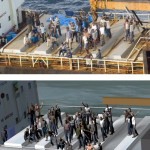
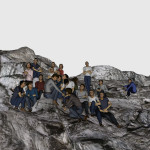
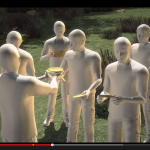
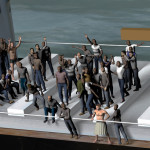
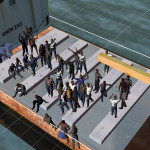
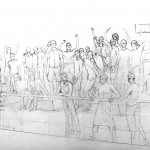
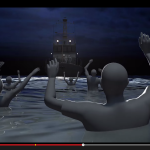
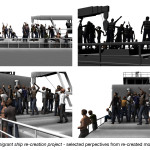
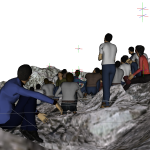
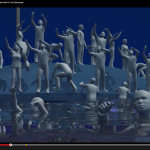
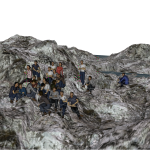
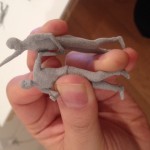
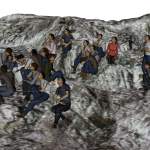
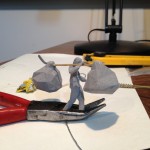
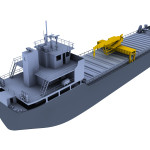
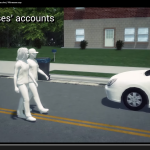
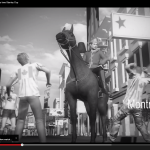
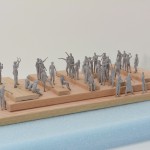
Figures on a Deck from Untitled Migrant Ship Re-Creation Project 2009/2014

migrantsculpture

Figures on a Deck from Untitled Migrant Ship Re-Creation Project
2009/2014
3D printed prototype, wood and green foam
38 figures, each figure approximately 2 inches in height.

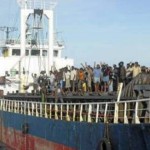
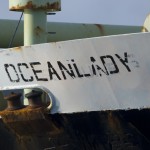
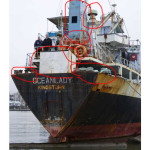
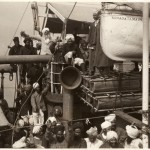
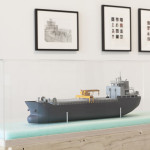
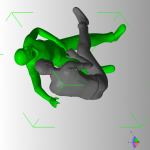
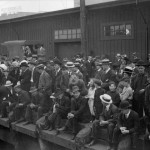
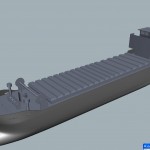
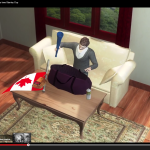
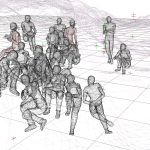
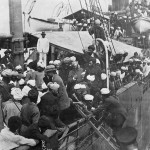
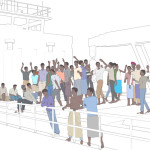
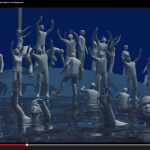
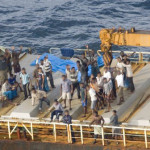
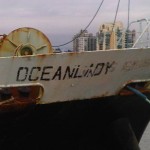
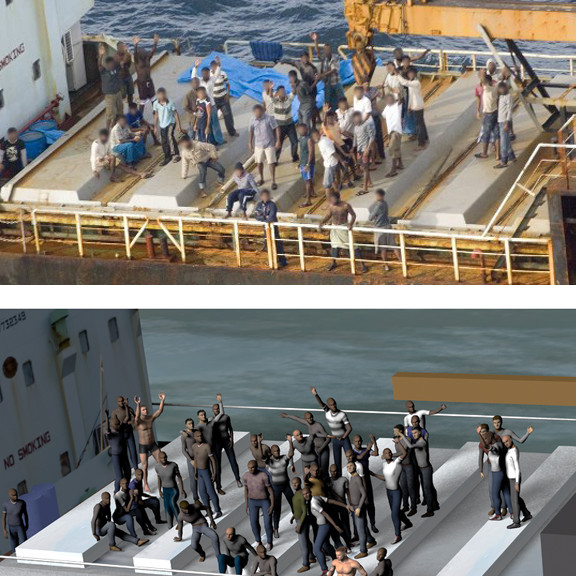
In 2009, the artist began a re-creation of a press image depicting the arrival of the Sri Lankan migrant ship, the MV Ocean Lady at the west coast of Canada. This work was realized in many different forms, but most notably as a 3D re-creation and 3D printed models. In addition to photographs, drawings, paintings and other works, there is a web archive of this project.

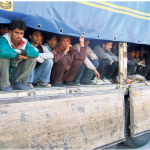
It is with this project that the artist began looking at how migration has been depicted in media and in history. This subject concerns the complexities and challenges of immigration and its history in Canada, some of which were experienced directly by the artist’s family and friends.

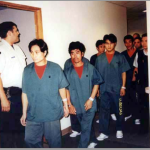
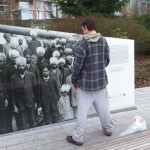
At the moment, numerous people from Africa and the Middle East are attempting to reach Europe by sea. Many Europeans view this as problematic, leading to a strong rise in nationalism and anti-immigration rhetoric and policy. These attitudes also exist closer to home: in 2009 and 2010, two ships arrived at the coast of BC carrying Tamil asylum-seekers from Sri Lanka. Canadian authorities seized these ships and detained their crew and passengers. There has been massive public debate and speculation over the legality of their refugee claims and the practice of human smuggling, and a climate of xenophobia has developed amidst accusations of immigration “queue-jumping” and fears of terrorism. This has been echoed many times in Canada’s history by the arrival of: Fujianese migrants in 1999, Jewish Europeans on the MS St. Louis in 1939 and Sikhs on the SS Komagata Maru in 1914. And it is difficult to separate this history from that of slavery and colonialization.
Untitled Migrant Ship Re-creation Project, 2009 – present, in progress

Untitled Migrant Ship Re-creation Project, 2009 – present, (in progress)

Migrant Ship Re-Creation Project – Main Works Page

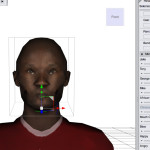
An ongoing archive of material generated from this in-progress project, including sketches, 3D renders, work documentation, installation views, research, and other related ephemera.

In 2009, the artist began a re-creation of a press image depicting the arrival of the Sri Lankan migrant ship, the MV Ocean Lady at the west coast of Canada. This work was realized in many different forms, but most notably as a 3D re-creation and 3D printed models. In addition to photographs, drawings, paintings and other works, there is a web archive of this project.

It is with this project that the artist began looking at how migration has been depicted in media and in history. This subject concerns the complexities and challenges of immigration and its history in Canada, some of which were experienced directly by the artist’s family and friends.

At the moment, numerous people from Africa and the Middle East are attempting to reach Europe by sea. Many Europeans view this as problematic, leading to a strong rise in nationalism and anti-immigration rhetoric and policy. These attitudes also exist closer to home: in 2009 and 2010, two ships arrived at the coast of BC carrying Tamil asylum-seekers from Sri Lanka. Canadian authorities seized these ships and detained their crew and passengers. There has been massive public debate and speculation over the legality of their refugee claims and the practice of human smuggling, and a climate of xenophobia has developed amidst accusations of immigration “queue-jumping” and fears of terrorism. This has been echoed many times in Canada’s history by the arrival of: Fujianese migrants in 1999, Jewish Europeans on the MS St. Louis in 1939 and Sikhs on the SS Komagata Maru in 1914. And it is difficult to separate this history from that of slavery and colonialization.

Forest Fires, 2009-10 (series)

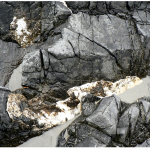
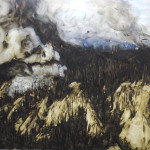
Forest Fires, 2009-10

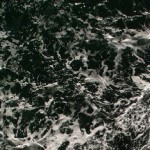
In the landscape series Forest Fires the artist continues to employ the manipulated printer ink technique used in Flashers to found images of British Columbia forest fires.
The artist approaches this material in a way that reflects these shifts: he experiments with printing on the back of expired photographic paper and works over the still-wet pigment ink using a paintbrush. This results in a unique (un-duplicable) image that is faint and distorted, and resembles a painting, while remaining fundamentally a photograph. The substrate’s watermark, which reads “KODAK PROFESSIONAL PAPER”, once the proud hallmark of Kodak’s analog photographic legacy, remains visible in the overexposure.

Installation View, In Dialogue with Carr, Vancouver Art Gallery,
Image courtesy Rachel Topham/VAG